As a supplier of Aluminum Diaphragm Pumps, I often get asked about the suction height limit of these pumps. It's a crucial question, especially for those who are looking to use these pumps in various applications. So, let's dive into what the suction height limit of an aluminum diaphragm pump is and what factors can affect it.
Understanding the Basics of Aluminum Diaphragm Pumps
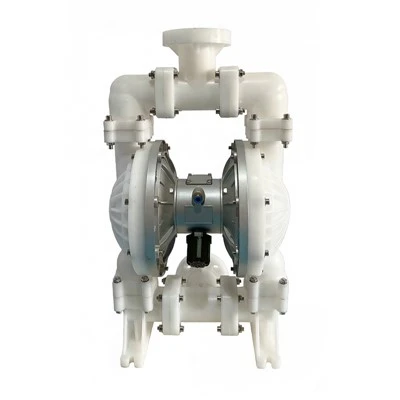
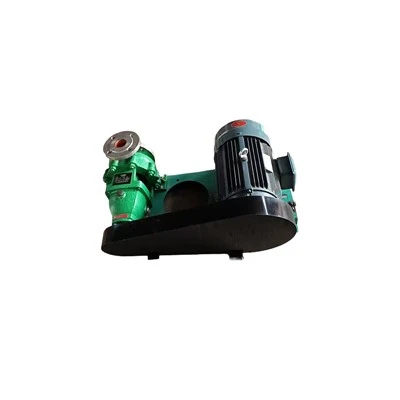
First off, let me give you a quick rundown on aluminum diaphragm pumps. These pumps are pretty cool. They use a diaphragm that moves back and forth to create a vacuum and then push the fluid through the pump. The aluminum construction makes them lightweight, corrosion - resistant, and suitable for a wide range of applications. You can check out more about them on our Aluminum Diaphragm Pump page.
What is Suction Height?
Suction height refers to the vertical distance from the surface of the liquid being pumped to the centerline of the pump's inlet. In simpler terms, it's how high the pump can "suck" the liquid up from a lower level. For example, if you have a tank of water on the ground and the pump is placed on a platform 5 meters above the water level, the suction height is 5 meters.
The Theoretical Suction Height Limit
In theory, the maximum suction height for any pump operating at sea - level is about 10.33 meters. This number comes from the fact that atmospheric pressure at sea - level is approximately 101.325 kPa, and the pressure exerted by a column of water is given by the formula (P=\rho gh), where (\rho) is the density of water ((1000\ kg/m^{3})), (g) is the acceleration due to gravity ((9.81\ m/s^{2})), and (h) is the height of the water column.
When you solve the equation (P = \rho gh) for (h) with (P = 101325\ Pa), (\rho=1000\ kg/m^{3}), and (g = 9.81\ m/s^{2}), you get (h=\frac{P}{\rho g}=\frac{101325}{1000\times9.81}\approx10.33\ m).
However, this is a theoretical limit. In real - world scenarios, an aluminum diaphragm pump will never reach this height. There are several reasons for this.
Factors Affecting the Suction Height Limit of Aluminum Diaphragm Pumps
1. Pump Design and Efficiency
The design of the pump plays a huge role. The size and shape of the diaphragm, the valves, and the overall internal structure can all affect how well the pump can create a vacuum. A well - designed pump will be able to create a stronger vacuum and thus have a higher suction height. For instance, if the valves in the pump are not sealing properly, air can leak in, reducing the vacuum and the suction height.
2. Fluid Properties
The properties of the fluid being pumped are also important. If the fluid is viscous, like thick oil, it will be more difficult for the pump to suck it up. You might want to consider a High Viscosity Diaphragm Pump for such applications. Additionally, if the fluid has a high vapor pressure, it can start to vaporize at lower pressures, which also limits the suction height. For example, if you're pumping a volatile liquid, it might start to boil before the pump can create enough vacuum to lift it.
3. Altitude and Atmospheric Pressure
As I mentioned earlier, the theoretical suction height is based on sea - level atmospheric pressure. As you go to higher altitudes, the atmospheric pressure decreases. This means that the maximum suction height of the pump also decreases. For every 1000 meters increase in altitude, the atmospheric pressure drops by about 10%. So, if you're operating at an altitude of 2000 meters, the maximum suction height will be significantly lower than at sea - level.
4. Pipe Friction
The length and diameter of the suction pipe, as well as the roughness of the pipe walls, can cause friction. This friction reduces the pressure at the pump inlet, making it harder for the pump to suck the liquid. A longer or narrower pipe will have more friction, and a rough - walled pipe will also increase friction.


Typical Suction Height Limits for Aluminum Diaphragm Pumps
In practical applications, the suction height of an aluminum diaphragm pump usually ranges from 3 to 6 meters. This is a realistic range considering all the factors I've mentioned above. Of course, there are some high - performance pumps that can achieve slightly higher suction heights, but these are exceptions rather than the norm.
Applications and Suction Height Requirements
Different applications have different suction height requirements. For example, in a small - scale chemical transfer application where the liquid is stored in a drum on the ground and the pump is placed on a bench a few meters above, a suction height of 3 - 4 meters might be sufficient.
On the other hand, in some industrial applications where the liquid is stored in a deep underground tank, a higher suction height might be needed. In such cases, you might need to use additional equipment like a priming system or a booster pump to increase the suction height.
How to Improve the Suction Height of an Aluminum Diaphragm Pump
If you need to increase the suction height of your aluminum diaphragm pump, there are a few things you can do. First, make sure the pump is properly maintained. Check the valves, the diaphragm, and the seals regularly to ensure they are in good condition.
Second, choose the right suction pipe. Use a short, wide - diameter pipe with smooth walls to reduce friction. Also, keep the pipe as straight as possible and avoid sharp bends.
Finally, if you're operating at a high altitude, consider using a pump with a higher - capacity vacuum system. You can also use a priming system to help the pump start and create a better vacuum.
Conclusion
So, in conclusion, the suction height limit of an aluminum diaphragm pump is affected by many factors, including pump design, fluid properties, altitude, and pipe friction. While the theoretical limit is about 10.33 meters, in real - world applications, the typical suction height ranges from 3 to 6 meters.
If you're in the market for an aluminum diaphragm pump or have questions about suction height requirements for your specific application, don't hesitate to reach out. We're here to help you find the right pump for your needs. You can also explore our Airless Diaphragm Pump options for different pumping solutions.
References
- "Fluid Mechanics" by Frank M. White
- "Pump Handbook" by Igor J. Karassik et al.