Hey there! As a diaphragm pump supplier, I often get asked about the ins and outs of these nifty devices. One question that pops up a lot is, "What is the pulsation of a diaphragm pump?" Let's dive right in and break it down.
Understanding Diaphragm Pump Basics
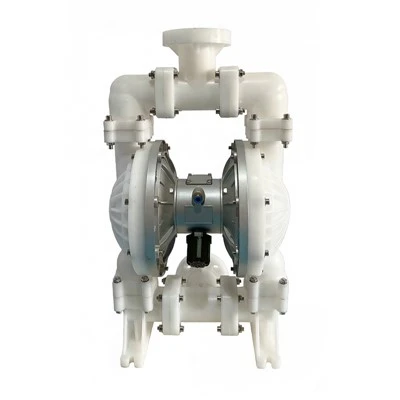
Before we jump into pulsation, let's quickly cover what a diaphragm pump is. A diaphragm pump is a type of positive displacement pump that moves fluids by using a flexible diaphragm. This diaphragm flexes back and forth, creating a vacuum on one side and pressure on the other. When the diaphragm moves away from the fluid chamber, it creates a low - pressure area, sucking fluid into the chamber. As it moves back towards the chamber, it expels the fluid out. They're used in a wide range of applications, from chemical transfer to wastewater treatment.
What is Pulsation?
Pulsation in a diaphragm pump refers to the uneven flow of the fluid being pumped. Unlike a smooth, continuous flow, the fluid comes out in a series of pulses. This happens because of the way the diaphragm moves. When the diaphragm flexes to draw in fluid, there's a moment when no fluid is being pushed out. Then, when it flexes the other way to expel the fluid, there's a surge of pressure.
For example, think of a heart. A heart pumps blood in a pulsatile manner. With each beat, it contracts and pushes blood out into the arteries, and then relaxes to fill up again. Similarly, a diaphragm pump's pulsatile flow is a result of its diaphragm's "contraction" and "relaxation" movements.
Causes of Pulsation in Diaphragm Pumps
There are a few reasons why pulsation occurs in diaphragm pumps.
- Diaphragm Movement: As I mentioned earlier, the back - and - forth motion of the diaphragm is the primary cause. Each time the diaphragm changes direction, it creates a variation in pressure, which leads to the pulsatile flow.
- Valve Operation: Diaphragm pumps use check valves to control the flow of fluid in and out of the chamber. When these valves open and close, they can also contribute to pulsation. For instance, when a check valve slams shut after the fluid has been pushed through, it can cause a small pressure spike.
- Design and Construction: The design of the pump, including the size of the fluid chamber and the thickness of the diaphragm, can affect the level of pulsation. A smaller chamber or a stiffer diaphragm may result in more pronounced pulsations.
Effects of Pulsation
Pulsation can have both positive and negative effects depending on the application.
- Positive Effects: In some cases, pulsation can actually be beneficial. For example, in certain mixing applications, the pulsatile flow can help to agitate the fluid more effectively. It can also be useful in applications where you need to create a "pumping action" to move the fluid through a system.
- Negative Effects: On the other hand, pulsation can cause problems in many applications. It can lead to increased wear and tear on the pump and the piping system. The pressure spikes can cause vibrations, which may loosen connections and even damage components over time. In precision applications, such as in the pharmaceutical or food industries, pulsation can disrupt the accuracy of the dosing or the quality of the final product.
How to Reduce Pulsation
If you're dealing with issues caused by pulsation, there are several strategies you can use to reduce it.


- Pulsation Dampeners: These are devices that are installed in the system to smooth out the flow. They work by absorbing the pressure spikes and releasing the fluid in a more consistent manner. Think of them as shock absorbers for the fluid flow. Explosion Proof Diaphragm Pump models often come with advanced pulsation dampeners to ensure safe and stable operation in hazardous environments.
- Multi - Diaphragm Design: Using a pump with multiple diaphragms can help to reduce pulsation. When multiple diaphragms are used, they can be arranged in such a way that the pulsations from one diaphragm are offset by the pulsations from another. This results in a more even flow. Our Aluminum Diaphragm Pump series offers multi - diaphragm options for users who need lower pulsation levels.
- Proper Sizing and Installation: Ensuring that the pump is the right size for the application and is installed correctly can also help to reduce pulsation. A pump that is too large or too small for the job may experience more severe pulsations. Additionally, proper piping layout and support can minimize the impact of vibrations caused by pulsation.
Different Types of Diaphragm Pumps and Pulsation
Let's take a look at how pulsation varies in different types of diaphragm pumps.
- High Viscosity Diaphragm Pump: These pumps are designed to handle thick fluids. The high viscosity of the fluid can actually help to reduce pulsation to some extent. The thick fluid resists the rapid changes in pressure, resulting in a smoother flow compared to pumping low - viscosity fluids.
- Airless Diaphragm Pump: Airless diaphragm pumps eliminate the need for compressed air, which can sometimes introduce variations in pressure and contribute to pulsation. Without the air supply variations, these pumps can offer a more consistent flow, especially in applications where air bubbles in the fluid could be a problem.
- Waste Oil Diaphragm Pump: Waste oil is often dirty and may contain solids. The pulsation in these pumps can be more difficult to control because the presence of solids can cause the check valves to wear out faster and not operate as smoothly. However, with proper maintenance and the use of anti - pulsation devices, the impact of pulsation can be minimized.
Contact Us for Your Diaphragm Pump Needs
Whether you're looking to understand more about diaphragm pump pulsation or you're in the market for a new diaphragm pump, we're here to help. We have a wide range of diaphragm pumps to suit various applications and budgets. Our team of experts can provide you with all the information you need to make an informed decision. So, if you're interested in purchasing a diaphragm pump or have any questions, don't hesitate to reach out. We're ready to have a chat and discuss how we can meet your specific requirements.
References
- "Positive Displacement Pumps Handbook" by J. Paul Tullis
- "Pump Handbook" by Igor J. Karassik et al.